Updated: July 2026
Is a Luxury Vacation at Nihi Sumba Worth the Price?
- All-Inclusive Model: The high nightly rate covers nearly everything, from gourmet meals to a vast array of unique daily experiences, preventing the nickel-and-diming common at other resorts.
- Radical Philanthropy: A significant portion of profits directly funds the Sumba Foundation, tangibly improving local lives through health, education, and water projects.
- Unmatched Exclusivity: With only 33 villas on 567 acres and access to a world-class private surf break, the resort offers a level of privacy that is virtually priceless.
The air hangs thick and warm, scented with sandalwood and the faint, briny tang of the Indian Ocean. From the open-air pavilion of my villa, the only sound is the rhythmic crash of surf against the 2.5-kilometer stretch of private beach. A pair of the island’s famous Sandalwood ponies canter along the shoreline, their forms silhouetted against the setting sun. This isn’t a postcard; it’s just another Tuesday evening at Nihi Sumba. For two decades, I’ve been dissecting the anatomy of luxury travel for Departures, and I’ve seen my share of resorts that promise the world. But here, on this remote Indonesian island a 55-minute flight from Bali, the promise feels different. It’s less about opulence and more about a profound connection to place. The question I hear most from discerning clients and readers is a simple one, yet it cuts to the core of the experience: Is a vacation at Nihi Sumba worth the staggering price tag?
The Genesis of an Icon: From Surf Camp to ‘Best Hotel in the World’
To understand Nihi Sumba’s value proposition, one must first understand its soul, which was forged not in a corporate boardroom but in the pursuit of a perfect wave. In 1988, American surfer Claude Graves and his wife Petra stumbled upon this untouched coastline and a now-legendary left-hand break, later dubbed “Occy’s Left.” They spent years building a simple, ten-bungalow surf camp for the intrepid few, naming it Nihiwatu. It was raw, remote, and deeply connected to the local Sumbanese community. The shift from rustic hideaway to global luxury icon began in 2012 when entrepreneur Chris Burch acquired the property, partnering with hotelier James McBride. They invested over $30 million, not to pave over the resort’s soul, but to amplify it. The vision was clear: create a destination that offered the pinnacle of comfort while preserving the “edge of wildness” and deepening the commitment to the local community. The result was a property so unique that it was voted the #1 Hotel in the World by Travel + Leisure readers for two consecutive years, in 2016 and 2017. This isn’t just a resort; it’s the evolution of a dream, built on 567 acres of pristine land where fewer than 100 guests at a time can experience a level of privacy that has become the ultimate modern luxury.
Beyond the Price Tag: Deconstructing the All-Inclusive Value
Let’s address the elephant in the room: the cost. Nightly rates for a one-bedroom villa begin around $1,500 in the low season and can escalate to over $20,000 for the multi-villa private estates. On the surface, it’s a breathtaking figure. However, a critical analysis reveals a value structure that many other high-end resorts can’t match. The rate at the nihiwatu resort is largely all-inclusive. This covers three gourmet meals per day, all non-alcoholic beverages, a daily restocked minibar, and a slate of curated activities that would carry hefty à la carte price tags elsewhere. We’re talking about guided treks through rice paddies to secluded waterfalls, explorations of ancient megalithic burial sites which have placed Sumba on UNESCO’s Tentative List, group yoga and meditation sessions, and tours of local villages. When you begin to quantify these experiences, the initial sticker shock subsides. A private guided 3-hour trek at a comparable resort might cost $250 per person. A village tour, another $200. Three multi-course meals of Nihi’s caliber could easily run $400-$500 per person daily. Suddenly, the all-inclusive model doesn’t just look convenient; it looks strategic. It allows guests to fully immerse themselves without the constant transactional friction of signing checks, creating a seamless and truly relaxing experience. A vacation at Nihi Sumba worth considering is one where this inclusive nature is fully appreciated.
The Villas: A Masterclass in Sumbanese Architecture and Private Luxury
The accommodations at Nihi are not mere rooms; they are sprawling, private sanctuaries engineered for disconnection. The 33 villas, ranging from one to five bedrooms, are built in the traditional Sumbanese style, featuring soaring, thatched alang-alang grass roofs that provide natural cooling. My sources on the design team confirm that over 80% of the building materials were locally sourced. Inside, the rustic-luxe aesthetic prevails: hand-carved wooden furniture, locally woven ikat textiles, and floors of polished concrete. Every single villa, without exception, has a private plunge pool and commanding ocean views. The entry-level Kanatar and Lamba villas offer more than 1,500 square feet of indoor-outdoor living space. Step up to a Marangga villa, and you’re treated to a cliff-top perch with a private path leading directly to the sea. For families or groups, the multi-villa estates like Raja Mendaka (Chris Burch’s personal residence) are essentially private resorts within the resort, complete with their own libraries, kitchens, and massive free-form swimming pools. The sense of privacy is absolute. You can go an entire day without seeing another guest if you so choose, a feat of landscape architecture on the sprawling 567-acre property. This isn’t just a place to sleep; it’s an integral part of the immersive Sumbanese experience.
“The Edge of Wildness”: Curated Experiences vs. Authentic Immersion
What truly sets Nihi apart and justifies its position in the luxury pantheon is its portfolio of experiences. These are not your standard resort activities. The signature “Spa Safari” is a case in point. It begins with a 90-minute trek through rolling hills and traditional villages, culminating at a secluded clifftop bale where guests enjoy a full day of unlimited, private spa treatments. It’s an immersion, not just an appointment. Another profound experience is the visit to a Sumba Foundation-supported project. This is where the resort’s philanthropic heart is laid bare. Guests can see firsthand the wells, schools, and health clinics funded by their stay. Since its inception in 2001, the Foundation has reduced malaria infection rates by over 93% in its core area and now provides clean water to over 25,000 people. This transforms a luxury holiday into an act of “radical philanthropy,” as the resort calls it. For those seeking cultural connection, witnessing the sunset horse release on the beach is a powerful, almost spiritual moment. The island of Sumba itself, twice the size of Bali but with only a fraction of its population (around 750,000 people), remains one of the last bastions of animist Marapu culture in Indonesia, a fact highlighted by the country’s own tourism authority. Engaging with this culture through the resort’s carefully curated and respectful programs is a privilege that money alone rarely buys.
Occy’s Left: The Myth and Reality of a World-Class Private Wave
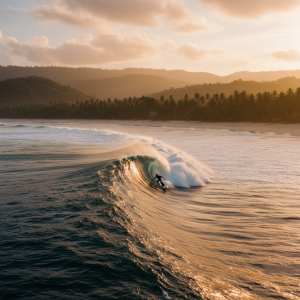
We must talk about the wave. For a specific and influential subset of Nihi’s clientele, Occy’s Left is the primary draw. It is a fast, barrelling, and remarkably consistent left-hand reef break that peels for over 200 meters directly in front of the resort’s Boathouse. What makes it arguably the most exclusive wave in the world is the resort’s strict policy: a maximum of 10 registered surfers are allowed in the water at any one time. A surf slot must be reserved in advance and costs approximately $150 per day. To the uninitiated, paying to surf may seem absurd. But to any serious surfer who has battled for waves at crowded breaks like Uluwatu or Pipeline, the concept of sharing a world-class wave with just nine other people is the ultimate fantasy. It guarantees more waves, a safer environment, and a purer surfing experience. The resort employs expert surf guides who understand the break’s every mood and can provide instruction or simply guidance on where to sit. This isn’t just about surfing; it’s about perfecting the surfing experience, removing all the frustrating variables and leaving only the primal joy of the ride. For these guests, the daily surf fee and the resort’s high price are a small toll for guaranteed access to a near-empty, perfect wave. This single element makes the vacation at Nihi Sumba worth the entire investment for the global surfing elite.
Quick FAQ: Your Nihi Sumba Questions Answered
How do you get to Nihi Sumba? The journey typically involves a flight to Bali’s Ngurah Rai International Airport (DPS), followed by a 55-minute domestic flight to Tambolaka Airport (TMC) on Sumba Island. From there, the resort provides a 90-minute transfer in an open-air 4×4 vehicle, which is an experience in itself. What is the best time of year to visit? The dry season, from April to October, is generally considered the best time for weather and consistent surf. The shoulder months of April, May, and October often provide a great balance of good weather and fewer crowds. Is the resort suitable for families? Absolutely. While it’s a haven for couples and surfers, Nihi offers a wealth of activities for children, including a kids club, equestrian activities, and cultural workshops. The multi-bedroom villas are perfectly suited for families seeking privacy and space. What is the Sumba Foundation? The Sumba Foundation is a non-profit organization founded by the resort’s original owners in 2001. It is dedicated to alleviating poverty on the island through community-based projects in health, education, water, and economic empowerment. A significant portion of Nihi Sumba’s profits are donated to the Foundation, making every guest a benefactor.
So, is it worth it? After careful consideration, my verdict is an emphatic yes, but with a crucial caveat. If your definition of luxury is gold taps and formal service, you may be disappointed. Nihi Sumba offers something far more valuable: a bespoke journey into a world of raw beauty, authentic culture, and profound purpose. It’s an investment in privacy, in unique experiences, and in the well-being of the Sumbanese people. This is not a passive vacation; it is an active participation in a vision of what conscientious travel can be. The price of admission is high, but the returns—in memories, in perspective, in impact—are immeasurable. To truly understand and craft an itinerary that unlocks the full potential of this remarkable place, expert guidance is essential. The team at Sumba Private Tour Atelier specializes in creating these seamless journeys, ensuring your experience at the nihiwatu resort is nothing short of transformative.