Updated: July 2026
Nihi Sumba vs. Cap Karoso: Which Sumba Resort is Best?
- For Untamed Adventure: Choose Nihi Sumba for its world-famous private surf wave, epic Spa Safari, and deep-rooted philanthropic mission.
- For Modern Design & Culture: Choose Cap Karoso for its striking brutalist architecture, on-site organic farm, and direct engagement with the local arts scene.
- For Ultimate Exclusivity: Nihi Sumba’s sprawling private estates and one-butler-per-villa model offer an level of seclusion.
Nihi Sumba vs. Cap Karoso: Which Sumba Resort is Best?
The air in Sumba hangs heavy and sweet, thick with the scent of woodsmoke and dry earth. A cavalcade of cicadas provides the island’s constant, electric soundtrack. For years, to speak of luxury on this wild island, twice the size of Bali but with a fraction of its visitors, was to speak of one place: Nihi Sumba. It was a destination whispered about in hushed, reverent tones, a resort that defined not just an island, but an entire philosophy of travel. But the wind, as it always does, is shifting. A new silhouette has risen on the coastline, one of clean lines and concrete modernism. Cap Karoso has arrived, and with it, a compelling new dialogue has begun. As an editor who has had the privilege of walking the sands of both, the question is no longer *if* you should go to Sumba, but *how* you wish to experience it. This isn’t a simple comparison; it’s a choice between two distinct, powerful visions of paradise.
The Legend and the Newcomer: Defining the Ethos
To understand the difference between Nihi Sumba vs Cap Karoso is to understand their origin stories. Nihi is the established legend, the pioneer. Originally founded as a surf lodge in 1988 by Claude and Petra Graves, it was transformed in 2012 by entrepreneur Chris Burch into the global icon it is today. Its ethos, “The Edge of Wildness,” is not a marketing slogan; it’s the resort’s very DNA. The entire experience is built on a foundation of rugged adventure, profound connection to nature, and a deep, actionable commitment to the local community through the Sumba Foundation. For over two decades, the Foundation has been a force for incredible good, drilling over 270 water wells and reducing infant mortality by over 85% in participating villages. Staying at the original nihiwatu resort is an investment in this legacy, a form of luxury that feels earned and purposeful. It’s a place that feels less built *on* the land and more grown *from* it.
Cap Karoso, in contrast, is the ambitious and stylish newcomer. Opened in 2023 by French founders Fabrice and Evguenia Ivara, it represents a completely different, though equally thoughtful, approach. Their vision was to create a cultural hub, a place where contemporary design, agricultural sustainability, and local artistry converge. The resort feels like a statement piece, a gallery-meets-beach-club where brutalist-inspired architecture stands in bold conversation with the untamed landscape. Its ethos is rooted in community and creativity. This is evident in its 3-hectare organic farm, which dictates the menus, and its commitment to fostering local talent through art programs. While Nihi’s soul is in its wild, untamed spirit, Cap Karoso’s is in its curated, creative community. It’s less about escaping the world and more about engaging with a new, modern vision of it.
Location and Landscape: Untamed Coast vs. Manicured Modernism
Both resorts occupy stunning tracts of Sumba’s dramatic southwestern coastline, yet their immediate environments feel worlds apart. Nihi Sumba is set on a vast 567-acre estate, a 90-minute, often bumpy, drive from Tambolaka Airport (TMC). This journey is part of the experience, a deliberate decompression from the modern world. The resort unfolds along a 2.5-kilometer private sweep of beach, flanked by dramatic headlands that conceal its 27 villas from one another. The focal point is the famed “Occy’s Left,” a world-class wave that breaks directly in front of the resort. The prevailing feeling at Nihi is one of immense space and raw, powerful nature. The landscape is the main character; the resort is a privileged supporting actor, designed to give you the best possible vantage point from which to watch the drama of the tides and the sky.
Cap Karoso is more accessible, located just a 45-minute drive from the same airport. It sits on the shores of Karoso Beach, a beautiful but more public-facing cove. The resort’s footprint is more compact, and its relationship with the landscape is one of intentional framing. The architecture, with its sharp lines and use of local stone, doesn’t try to blend in. Instead, it acts as a lens, directing your gaze towards the sea, the sunset, or the sky. The property feels less like a sprawling, private wilderness and more like a beautifully designed stage set against a natural backdrop. Its proximity to traditional villages like Ratenggaro, known for its soaring grass roofs and ancient megalithic tombs, makes it an excellent base for cultural exploration. As noted by Indonesia’s official tourism board, this region is the heartland of the annual Pasola festival, a ritualized battle on horseback that is one of the country’s most spectacular cultural events.
The Villas and The Vibe: Rustic Opulence vs. Brutalist Chic
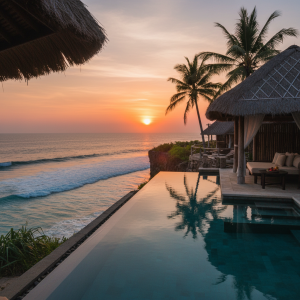
The accommodation at each resort is a physical manifestation of its core philosophy. Nihi’s 27 villas are masterpieces of rustic, Sumbanese-inspired opulence. Each is unique, featuring soaring thatched alang-alang roofs, antique textiles, carved wooden totems, and sprawling indoor-outdoor living spaces. Every villa boasts a private pool and is assigned a dedicated guest captain, or pribadi, ensuring an almost telepathic level of service. The experience is one of profound privacy; you can go days without seeing another guest if you so choose. The pinnacle of this is Raja Mandaka, Chris Burch’s personal six-villa estate, which includes a library, a private restaurant, and a cantilevered pool with one of the best views in Indonesia. The vibe is barefoot luxury, deeply connected to place and tradition. It’s a world where you feel like a guest in a magnificent private home.
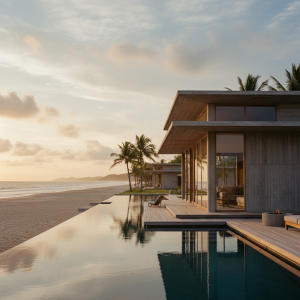
Cap Karoso offers a starkly different aesthetic. Its 47 studios and 20 villas are an ode to modernist design, with clean lines, polished concrete, and a palette of natural wood and stone. The look is a sophisticated take on tropical brutalism, softened by custom-made furniture and a curated collection of contemporary art and local crafts. This is a space for the design-conscious traveler who appreciates a strong architectural point of view. The social energy here is also different. The central beach club and restaurant, Apéro, create a natural gathering point, fostering a more communal, social atmosphere than the secluded privacy of Nihi. While villas offer private pools and seclusion, the resort’s heart is its shared spaces. The vibe is chic, creative, and cosmopolitan—more of a high-design community than a private escape.
Epicurean Journeys: From Treehouse Dining to Farm-to-Table Feasts
At Nihi Sumba, dining is less about the plate and more about the place. The culinary program is excellent, with fresh-caught fish, vibrant local produce, and international flair, but the real magic lies in the *experience*. Breakfast might be a private table set up next to a thundering waterfall after a morning trek. Lunch is often at the laid-back Nio Beach Club, feet in the sand. Dinner at the main restaurant, Ombak, is an event, but the most coveted reservation is for a private meal in the resort’s open-air treehouse. The emphasis is on creating unforgettable moments. The weekly Sumba Foundation dinner, where guests learn about the foundation’s work, adds a layer of meaning to the meal, connecting the indulgence of the resort directly to its philanthropic purpose. Dining at Nihi is an adventure, an integral part of the unforgettable Sumba experience they have perfected.
Cap Karoso, by contrast, places the culinary program at the very center of its identity. The resort’s 3-hectare organic farm is not just a resource; it’s a destination in itself, with guests encouraged to tour the gardens and learn about the produce. This explicit farm-to-table philosophy informs every dish at the main restaurant, Julang, and the more casual beach club. The menus, crafted by a team with experience in Michelin-starred kitchens, showcase a modern, ingredient-driven approach that fuses Indonesian flavors with contemporary European techniques. The presence of a saké bar and a focus on natural wines speaks to a discerning, modern palate. While private dining can be arranged, the energy is focused on the restaurants as destinations. The experience is for the dedicated epicurean who travels for flavor and culinary innovation.
Signature Experiences: The Wave, The Horses, and The Culture
This is where the distinction between Nihi Sumba vs Cap Karoso becomes sharpest. Nihi’s reputation was built on a foundation of truly unique, money-can’t-buy-it-elsewhere experiences. The first and most famous is “Occy’s Left.” Access to this perfect, private wave is strictly limited to 10 surfers per day, creating one of the most exclusive surfing experiences on the planet. Then there are the horses. The image of riding a powerful Sumbanese Sandalwood pony along the tide line at sunset is iconic for a reason. And finally, there is the Nihioka Spa Safari. This is not a spa treatment; it’s a full-day journey that begins with a 90-minute trek through rice paddies and villages, culminating in a private cliff-top bale where you enjoy unlimited spa treatments for the rest of the day. These are grand, sweeping, bucket-list adventures that define a stay at Nihi.
Cap Karoso’s experiences are more intimate and culturally immersive. They leverage their deep connections to the local Kodi community to offer something different. Guests can participate in workshops with local artisans, from weavers to woodcarvers, often at the resort’s dedicated cultural center. They can spend time on the farm, learning about permaculture and traditional farming techniques. The resort facilitates authentic visits to nearby villages and provides access to understanding the ancient Marapu religion and the island’s unique megalithic traditions. While they offer surfing, diving, and foiling, these activities don’t carry the same legendary weight as Nihi’s offerings. A stay at Cap Karoso is about a gentler, more educational form of discovery, focused on creative and cultural exchange rather than high-octane adventure.
Quick FAQ: Nihi Sumba vs. Cap Karoso
Which resort is better for surfing?
Nihi Sumba, unequivocally. Its private wave, “Occy’s Left,” is a world-class break limited to just 10 registered surfers, offering an exclusive experience Cap Karoso cannot match. While Cap Karoso can arrange surfing at nearby breaks, it lacks the on-site, legendary status of Nihi’s wave.
How far apart are Nihi Sumba and Cap Karoso?
They are approximately 35 kilometers (about 22 miles) apart by road. The drive between them takes around 60-75 minutes, traversing the rugged and beautiful coastal landscape of Southwest Sumba. It is entirely possible to experience both on a longer trip.
Is Sumba safe for luxury travel?
Yes, Sumba is considered very safe for travelers, particularly within the ecosystem of these premier resorts. Both properties have extensive on-site security and offer curated, expertly guided excursions. The island’s unique Marapu culture is fascinating but requires respectful engagement, which these resorts masterfully facilitate for their guests.
Which resort has a better spa?
This depends on your definition of “better.” Nihi Sumba’s “Spa Safari” is an iconic, full-day journey to a remote clifftop with unlimited treatments, making it an *experience*. Cap Karoso’s Malala Spa is a more conventional, though beautifully designed, wellness center focusing on modern therapies, sound healing, and local ingredients in a contemporary setting.
Ultimately, there is no single “best” resort on Sumba. The arrival of Cap Karoso has simply enriched the island’s offerings, providing a brilliant counterpoint to Nihi’s established legend. The choice is a reflection of your own travel desires. Do you seek the untamed, the epic, the philanthropic legacy of a place that feels like it’s at the very edge of the world? Or are you drawn to the new, the stylish, the creative energy of a place that is actively shaping a modern cultural dialogue? One is a whisper, the other a conversation. Both speak the beautiful, wild language of Sumba.
To craft your own journey to the edge of wildness, whether at the legendary nihiwatu resort or its stylish new neighbor, explore our bespoke itineraries. The Sumba Private Tour Atelier team has intimate, first-hand knowledge of both properties and the nuances that make each one extraordinary. Contact us to begin designing your perfect Sumbanese escape.