Updated: July 2026
A Complete Guide to Nihiwatu Villa Prices and Packages
- Rates cover all meals, non-alcoholic drinks, and a selection of daily activities.
- Pricing is tiered by season, with Peak Season (July-August, holidays) being the highest.
- Villa categories range from intimate one-bedroom hideaways to the expansive multi-villa Raja Mandaka estate.
The air on Sumba’s west coast hangs heavy with the scent of salt and dry earth, a fragrance you learn to associate with anticipation. A Land Rover, open to the elements, navigates a final bend, and the Indian Ocean unfurls below, a vast expanse of impossible blue. This is the arrival at Nihi Sumba, and it’s less a hotel check-in than a crossing of a threshold. You hear the rhythmic crash of the resort’s famed wave, “Occy’s Left,” a sound that will become the metronome of your stay. The question that hangs in the air, as potent as the frangipani, isn’t just about the beauty—it’s about the value. What does it truly cost to access this meticulously preserved parcel of wilderness, and what does that investment yield? As a travel editor, I’ve seen countless price lists, but understanding Nihiwatu villa prices requires looking beyond the numbers and into the philosophy of the place itself.
Deconstructing Nihi’s All-Inclusive Philosophy
Before we dissect the villa categories, it’s crucial to understand that Nihi Sumba operates on a principle of “unfettered freedom.” The term “all-inclusive” here is a world away from the wristbands and buffets of the mass market. It’s a sophisticated financial structure designed to remove every ounce of friction from the guest experience. The nightly rate is not just for a room; it’s for access to a 567-acre private estate where your whims are anticipated and catered for. As the resort’s long-standing Guest Experience Manager, a man named Umbu, once told me over a fresh coconut, “We want our guests to forget about their wallets. Their only currency here should be time and curiosity.”
So, what does this currency buy? The rate comprehensively covers all meals—breakfast, lunch, dinner, and all-day snacks—served in various locations, from the cliffside Ombak restaurant to a private barbecue on a deserted beach. It includes all non-alcoholic beverages, a daily restocked minibar, and even a selection of local Sumbanese spirits. A surprisingly practical inclusion is the laundry service, with up to six pieces per person laundered daily. Furthermore, a roster of scheduled group activities is part of the package: morning yoga sessions in a sea-facing pavilion, treks to cascading waterfalls, explorations of local villages, and access to watersports equipment like paddleboards and snorkeling gear. The idea is that from the moment you arrive, the answer to most requests is simply “yes.” The only significant exclusions are alcoholic beverages, specialized spa treatments, and the highly coveted surf slots for Occy’s Left, which are managed separately to preserve the wave’s integrity.
A Tiered Approach: Villa Categories and Seasonal Pricing
The core of understanding nihiwatu villa prices lies in its two primary variables: the villa type and the time of year. The resort’s 28 villas are not uniform; they are individually designed estates, each offering a different perspective on the landscape. Pricing is stratified across three main seasons. Green Season (roughly January to March and November to early December) offers the most attractive rates. Shoulder Season (April to June and September to October) presents a perfect balance of superb weather and moderate pricing. Peak Season (July, August, and the festive holiday period) commands the highest premium, reflecting ideal conditions and high demand.
For couples or solo travelers, the entry point is the collection of one-bedroom villas. The Lamba and Lulu Amahu villas, starting around $945++ per night in Green Season and rising to $1,445++ in Peak, are set within lush gardens, each with a private plunge pool. The iconic choice, however, is the Marangga villa. Perched on a cliff’s edge with a private path to the sea, these one-bedroom sanctuaries feature a secluded outdoor bale perfect for watching the sunset. Rates for a Marangga villa typically range from $1,495++ in the low season to $2,095++ in the high season. For families or small groups, estates like the two-bedroom Kasambi or Wamoro (from $2,595++ to $4,195++) offer multiple pavilions, expansive private pools, and dedicated living areas. At the apex of the resort is the Raja Mandaka estate, the personal domain of owner Chris Burch. This sprawling six-villa compound, complete with a private library, dining pavilion, and one of Sumba’s largest pools, can accommodate up to 12 guests, with prices moving from $9,000++ to over $19,495++ per night. Remember, all prices are subject to an additional 21% tax and service charge.
Signature Experiences: The Value Beyond the Villa
While the villas provide an extraordinary sanctuary, the true value of a stay at the Nihiwatu resort is realized through its signature experiences—curated adventures that are often the primary reason for the journey. The most famous of these is the Nihioka Spa Safari. This is not a simple spa appointment; it is a half-day pilgrimage. It begins with a 90-minute trek through rolling hills and traditional villages, culminating at a secluded cove with two private, open-air treatment bales. Here, guests enjoy unlimited spa treatments for hours, interspersed with a fresh breakfast or lunch cooked over an open fire. At approximately $595++ per couple, it’s an investment in profound tranquility and isolation.
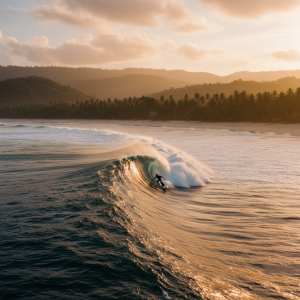
For surfers, the allure is singular: Occy’s Left. This world-class wave breaks directly in front of the resort, and access is fiercely protected. A maximum of 10 surfers are permitted in the water at any one time, a policy that guarantees an uncrowded, pristine experience unheard of at other global surf breaks. Securing a surf slot costs around $150++ per day, a fee that surfers I’ve spoken with consider a pittance for what is essentially a private session on one of the planet’s most consistent left-hand barrels. Beyond the water, the resort’s equestrian program is central to its identity. The sunset beach ride, where you can gallop along the 2.5-kilometer stretch of sand as the sky ignites, is a formative memory for nearly every guest. These experiences underscore the resort’s ethos: the price facilitates access to moments that are, for all intents and purposes, priceless.
The Philanthropic Dividend: Investing in Sumba’s Future
It is impossible to discuss the cost of Nihi Sumba without addressing the Sumba Foundation. This is not a token corporate social responsibility program; it is the ethical bedrock of the entire operation. Founded by the resort’s original creators in 2001, the Foundation is a vehicle for channeling a significant portion of the resort’s profits back into the local community. This connection transforms a luxury vacation into a form of sustainable, impactful tourism. When you pay for your villa, you are directly funding projects that have had a quantifiable, life-altering impact on the island of Sumba.
The statistics are compelling. The Foundation has been instrumental in reducing Malaria infection rates in its core area by over 90% through its network of clinics and educational programs. It has built and supports over 16 primary schools and provides over 360 school lunches daily. Access to clean water, a critical issue on this arid island, has been addressed with the construction of over 60 water wells and 240 water stations, serving more than 25,000 people. A tour of a Foundation project—visiting a clinic or a school—is a complimentary and highly recommended activity for guests. It provides a powerful context for the resort’s existence and reframes the high price point. You are not merely a tourist; you are a patron, and your stay contributes to a legacy of health, education, and prosperity for the Sumbanese people. This philanthropic component is a key differentiator that elevates the experience beyond simple indulgence.
The Cultural of “The Lost World”
A stay at Nihi is also an immersion into one of Indonesia’s most fascinating and least understood cultures. Sumba, part of the East Nusa Tenggara province, is culturally distinct from its neighbors. The island is the last remaining bastion of a functioning megalithic culture in the world, where massive stone tombs are still erected to honor the dead. The indigenous belief system, Marapu, an animistic faith centered on ancestral spirits, continues to guide daily life, evident in the intricate rituals and soaring, thatched-roof clan houses that dot the landscape. Understanding this context enriches every interaction, from the warm greetings of the staff (over 90% of whom are Sumbanese) to the design of the villas themselves, which incorporate local carving and world-renowned Sumba ikat textiles.
This cultural richness is a key part of the Nihi Sumba experience. The resort facilitates respectful engagement, offering trips to local markets, villages, and even, for those visiting in February or March, a chance to witness the legendary Pasola festival. This ancient ritual involves hundreds of horsemen in traditional dress engaging in mock battles with wooden spears—a spectacle of incredible color and intensity. By providing this window into Sumbanese life, Nihi ensures that guests leave not just with memories of a beautiful beach, but with a genuine appreciation for a culture that has remained resilient and vibrant in the face of modernity. This deep sense of place is a luxury that no amount of money can replicate elsewhere.
Quick FAQ on Nihiwatu Villa Prices
What is the best time to visit for value? The shoulder seasons, specifically April-June and September-October, offer the best balance. You’ll find superb weather, ideal for both surfing and land-based activities, with villa rates that are typically 20-30% lower than the Peak Season prices of July and August.
Are tips included in the 21% service charge and tax? The 10% service charge is collected and distributed equitably among all staff members. While further tipping is not required or expected, many guests who have received exceptional personal service choose to leave an additional gratuity at the central office upon check-out, which is then added to the general staff fund.
Can you book just one night at Nihi? It is almost impossible. To ensure guests fully immerse themselves in the environment and experience, the resort enforces a minimum stay policy. This is typically 3 nights during the Green and Shoulder seasons, and can extend to 5 or even 7 nights during the festive period around Christmas and New Year’s.
Do children’s rates apply? Yes, Nihi is very family-friendly. Children under the age of five stay free of charge when sharing a villa with their parents. For children aged 6 to 11, a supplemental nightly rate of approximately $275++ applies, which includes all their meals and activities, including access to the dedicated kids’ club and equestrian programs.
Ultimately, a stay at Nihi Sumba is an investment in exclusivity, access, and impact. The price of a villa is a ticket to a world where thundering herds of horses meet the surf at dawn, where ancient cultures are not just observed but honored, and where your presence contributes directly to the well-being of the community. It is a proposition that redefines luxury, moving it from the realm of the material to the domain of the experiential. For those ready to craft their own Sumbanese narrative, the experts at Sumba Private Tour Atelier can navigate the complexities of villa selection and seasonal availability. Let us help you secure your place at the extraordinary Nihiwatu resort.